
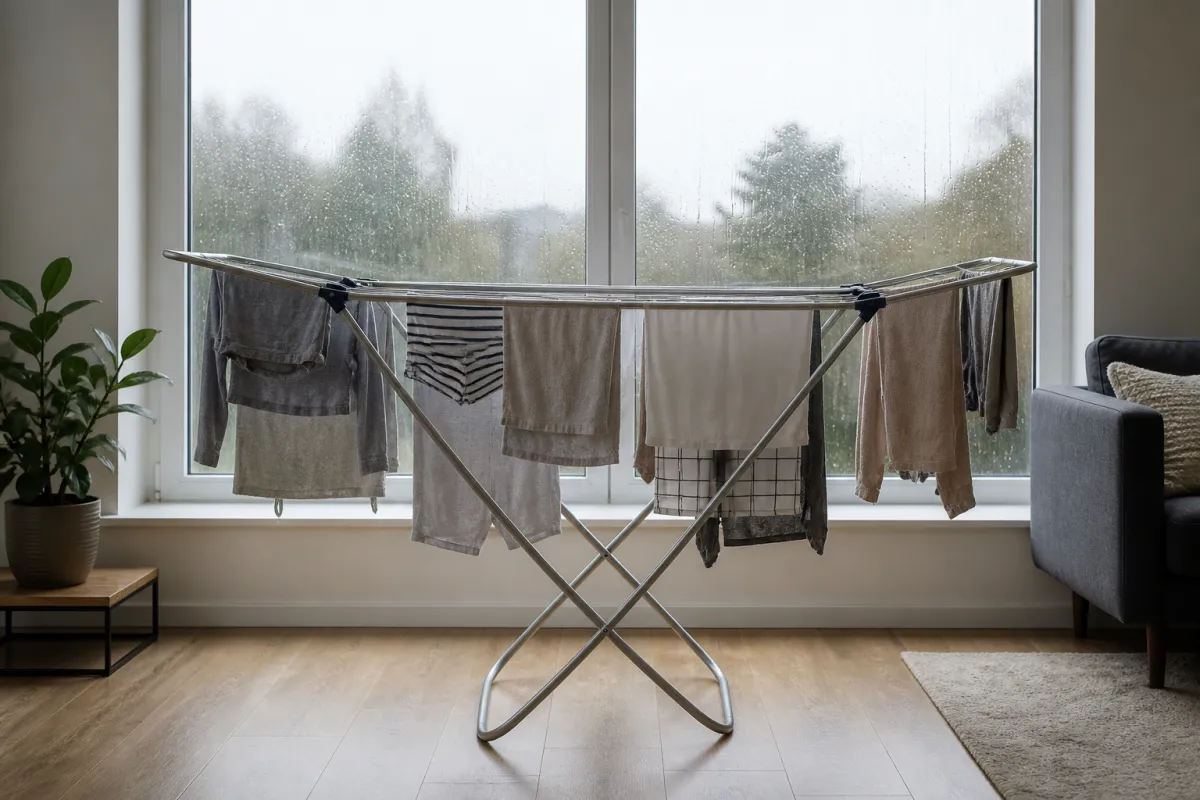
A few days of late-summer rain and the clothes airer is back in the living room or the bathroom. Drying laundry indoors feels like the zero-cost option, the free alternative to a tumble dryer. In reality all the water held in the washing ends up in the air of the room, and getting rid of it again carries a cost almost nobody adds up.
How much water you release into the house
A load of washing straight out of the spin cycle easily holds two or three litres of water. Dry it indoors and that water does not vanish: it evaporates slowly and settles as moisture on the walls, the windows and the coldest corners of the house. Plenty of people know the result: condensation on the windows in the morning, air that smells stuffy, and in time the first patches of black mould in the corners and behind the furniture. That is a health issue as much as a bills issue, especially in poorly ventilated homes.
Where the cost is hiding
To clear that moisture you have three options, and none is truly free. Opening the windows in winter means throwing out the warm air you have paid to heat. Leaving the heating on longer to dry the clothes burns gas or electricity. Running a dehumidifier, the most effective defence against mould, adds around 0.2 to 0.3 kWh for every hour it runs, which at about 26p per kWh becomes a real cost if you leave it going for hours. In practice, drying indoors is never free: it just shifts the cost from the tumble dryer's meter to the dehumidifier's or the heating's.
How to dry indoors without paying for it
A few habits cut the bill sharply. Spin on a high speed before you hang anything out: every drop wrung out in the machine is a drop that will not evaporate in the living room. Dry in a single room, keep the door shut and vent it to the outside, ideally with a dehumidifier running inside, so the moisture is concentrated in one place. Avoid drying in the bedroom, where overnight humidity feeds mould and condensation. Our guide to energy efficiency at home covers the ventilation side in more detail.
When the dryer actually wins
On cold, damp days a heat-pump tumble dryer, which uses far less than the older vented sort, can work out cheaper than the combined cost of the dehumidifier and extra heating needed to dry clothes on an airer, and it spares you the mould risk. So it is not a given that drying indoors is the cheaper choice. To find out, weigh the real running costs against your own unit rate with our guide to saving electricity, and see which route actually costs less for you.