
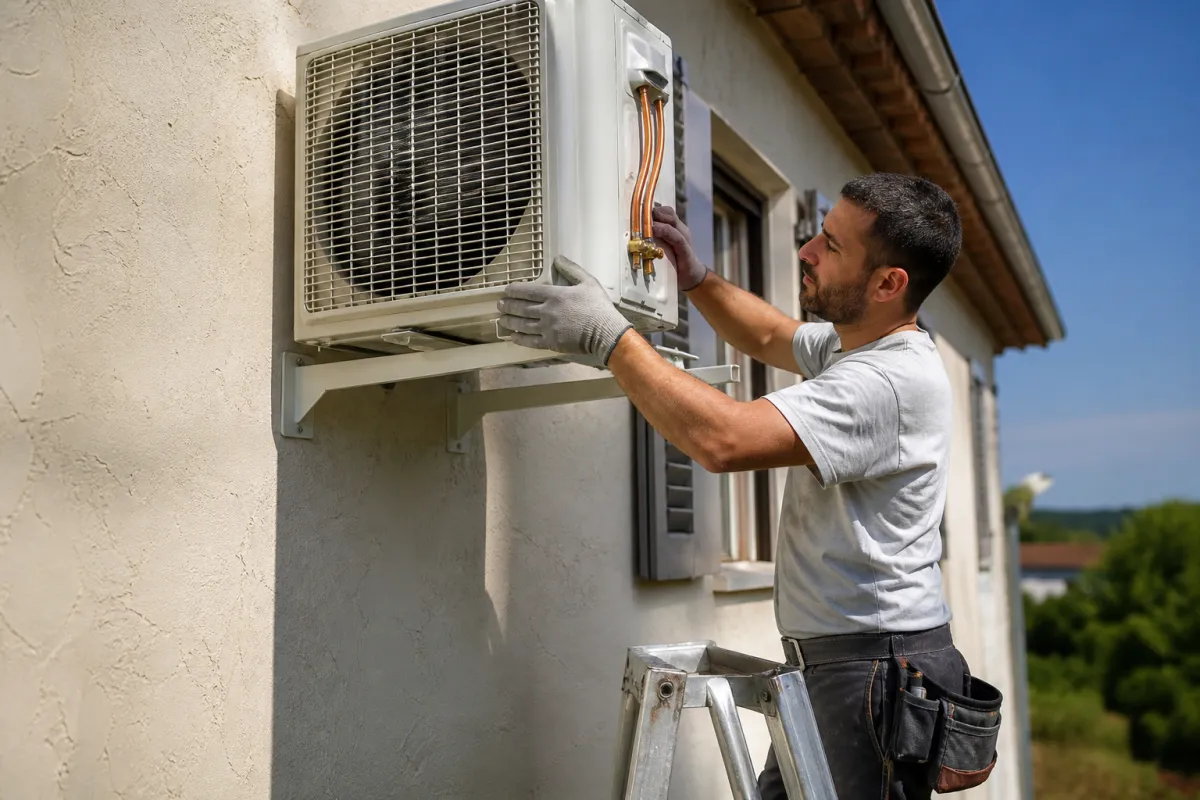
Once another baking summer is behind us, the same thought crosses many minds: enough of noisy portable units, time for a proper fixed system before next year. Deciding now, at the end of the season, beats waiting for June: prices are keener and installers have far shorter waiting lists. It is worth knowing what actually gets fitted, what it costs all in, and which permissions apply before you sign a quote.
What actually gets fitted
The first choice is how many rooms you want cooled. A single split serves one room with an indoor unit and an outdoor condenser; a two-zone multi-split links two indoor units to one outdoor unit; a full multi-split or ducted system covers the whole house. Almost every model sold now is a heat pump, so it warms the place in winter too.
Three practical points decide whether the job is straightforward, whatever the model:
- Where the outdoor unit goes: an external wall, balcony or flat roof, mindful of how the building looks from outside.
- How the pipework runs: two copper pipes linking the indoor and outdoor units, tucked away where possible.
- Where the condensate drains: several litres a day that need routing without troubling the flat below.
What it costs, all in
The price turns on the size of the system and how many rooms you want cooled. A single wall-mounted split for one room, fitted, typically runs £1,500 to £3,000, of which the labour alone is £700 to £1,200. A two-zone multi-split for two bedrooms sits at £3,200 to £4,500; cover three or four rooms and you are into £4,000 to £8,000; a ducted whole-home system climbs well beyond that.
The installation is a big part of the figure: brackets, core drilling, pipework, charging the refrigerant and the electrical connection add several hundred pounds, and the total swings on whether the outdoor unit is easy to reach or needs scaffolding. Prices in London and the South East run 20 to 30 percent above the rest of the country, so the same job is not the same price everywhere.
Good to know: fixed air conditioning is still far less common in British homes than on the Continent, so quotes vary widely. Get at least three, and make sure each one is from an F-Gas certified installer.
Permissions and the rules that apply
This is where people get caught out. The outdoor unit goes on an external wall, and that can bring the rules into play. For most houses a single unit needs no planning permission, but flats, listed buildings and conservation areas are a different matter, and a leaseholder will usually need the freeholder's written consent before anything is fixed to the building.
It pays to sort the paperwork before the fitter arrives:
- Check your lease and local planning rules first, especially in a flat or a conservation area.
- Get the freeholder's consent in writing and keep the installer's stated noise level on file.
- Do not have a unit fitted without the right permission: it can end up being removed at your own expense.
- Do not overlook the noise towards neighbours, which is the usual ground for a complaint.
Fitting is a job for a certified installer
Fitting a fixed system is not a DIY job. Handling the refrigerant is restricted to firms and engineers holding F-Gas certification, the qualification the law requires. Ask to see it before you sign: without it the warranty can be void and the work non-compliant. A certified installer also commissions the system properly, which is what keeps it efficient from day one.
The wait, and why September wins
In the thick of summer, installers are swamped and waiting times stretch to weeks, with prices to match. By the end of the season demand drops, better quotes appear, and the system is fitted and tested long before the next heatwave arrives. It is the same logic that rewards buying any seasonal item out of season. To weigh up the options first, our guide to air conditioning is the place to start.
The running cost, worked out
A well-sized fixed unit with a high efficiency rating uses less than an old portable, but it is still a meaningful line on the bill. Before fitting one, it is worth thinking about how much you will use it and on what tariff, because the running cost depends as much on the price of a kWh as on the machine itself.
One more thing worth pinning down: get servicing written into the quote, because cleaning the filters and checking the gas keep the unit efficient, and a neglected system drives the bill up within a few seasons. If you are weighing the cheaper route, our guide to a portable air conditioner is a useful comparison. Deciding now, unhurried, avoids both the impulse buy and the June scramble.