
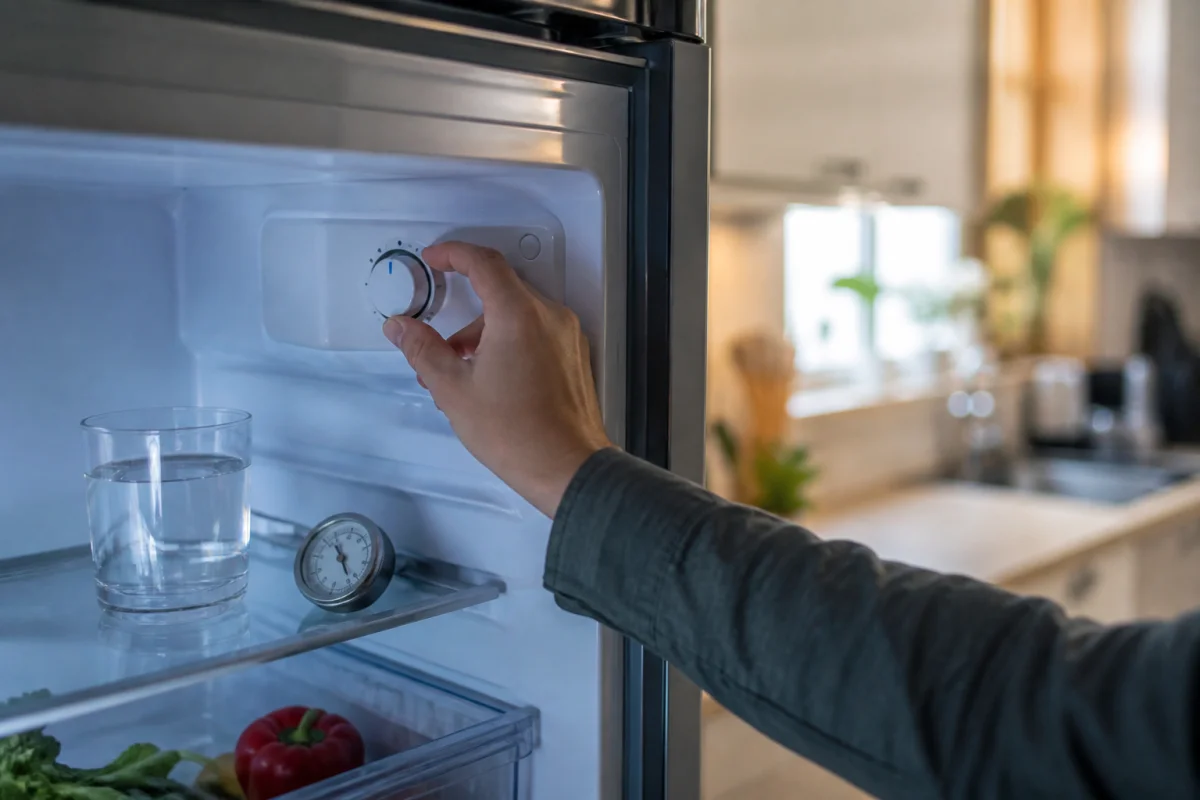
The fridge door swings open, a wave of cold air spills out, and it never occurs to anyone to ask whether that chill is actually set right. Yet most fridges in British kitchens work harder than they need to, kept a few degrees colder than the food ever requires. It does nothing extra for freshness, and it keeps the compressor running longer than it should. Here is how to find out what temperature your fridge is really at, and why the sensible move is almost always to turn it up, not down.
Why the dial is not a temperature
The first mix-up is that little numbered dial, usually running from 1 to 5. Those numbers set the cooling intensity, not the temperature in degrees: a 3 does not mean 3°C, it simply means a middling amount of cooling. The higher you push it, the harder the compressor works and the more electricity it draws, without ever telling you what temperature the inside has actually reached.
The cold is not spread evenly either. The door and the salad drawer are the warmest spots, while the coldest zone varies from model to model and is set out in the manual.
The number that matters: 5°C, and -18°C in the freezer
The food-safety guidance is clear. The Food Standards Agency recommends keeping your fridge at 5°C or below, which slows or stops the growth of most harmful bacteria. Going colder adds nothing for safety; it only costs more to run and can spoil the texture of some foods.
For the freezer, the reference figure is -18°C, the standard that keeps frozen food stable without pushing energy use up needlessly. Setting the fridge to 1 or 2°C does not protect your food any better; it simply inflates the bill.
Good to know: the two figures worth memorising are 5°C in the coldest part of the fridge and -18°C in the freezer. There is nothing to gain by going lower.
The glass-of-water test
To learn the real temperature inside, do not trust the air, which changes every time the door opens. The reliable home method uses water instead:
- Fill a glass with tap water and stand it on the middle shelf.
- Close the door and leave it overnight, without opening the fridge.
- First thing in the morning, dip in a kitchen thermometer and read the water temperature before the door has been opened.
- Adjust one notch at a time: above 5°C turn the dial up, well below it ease back, then test again.
For raw meat and fish, repeat the reading in whichever zone the manual flags as the coldest.
What each extra degree costs
Over-chilling has a price. Every degree below the temperature you actually need adds roughly 5% to the fridge's running cost, and a fridge is already one of the most expensive appliances to run because it never switches off.
A typical fridge-freezer gets through around 420 kWh a year. At the current price cap of about 26p a unit, here is how the yearly cost shifts with the setting:
The gap between 2°C and the recommended 5°C is about £16 a year thrown away for no gain in food safety. For a full breakdown of what each appliance really costs to run, our guide does the sums at your own unit rate.
What really pushes the bill up
Temperature is not the only culprit. The compressor is also made to overwork by a handful of faults that are easy to put right:
- Worn door seals: trap a sheet of paper in the door and if it slides out easily, the seal has gone and needs replacing.
- A rear coil clogged with dust, which stops the unit shedding heat.
- Too little clearance behind the fridge, or a spot next to the oven or a warm room.
- Long spells with the door open, and hot food put straight in before it has cooled.
So before you touch the thermostat, it is worth learning how to cut your electricity use across the kitchen and how to make your home more energy efficient.
The right shelf for every food
Getting the thermostat right counts for little if the food then ends up in the wrong place. The trick is to work with the cold map of your fridge:
- The bottom shelf is usually the coldest, so raw meat and fish belong there, where any drips cannot reach the food below.
- The door and salad drawer are the warmest spots, best kept for drinks, condiments, fruit and vegetables.
- Never cram the fridge full: cold air needs to circulate, or some corners stay lukewarm.
Getting the fridge right is the easiest win of all, and for once the correct move is to turn it up a notch, not down.
- In short
- Set the coldest part of the fridge to 5°C and the freezer to -18°C.
- Check the real temperature with the glass-of-water test.
- Mind the door seals, the rear coil and the gap behind the unit.