
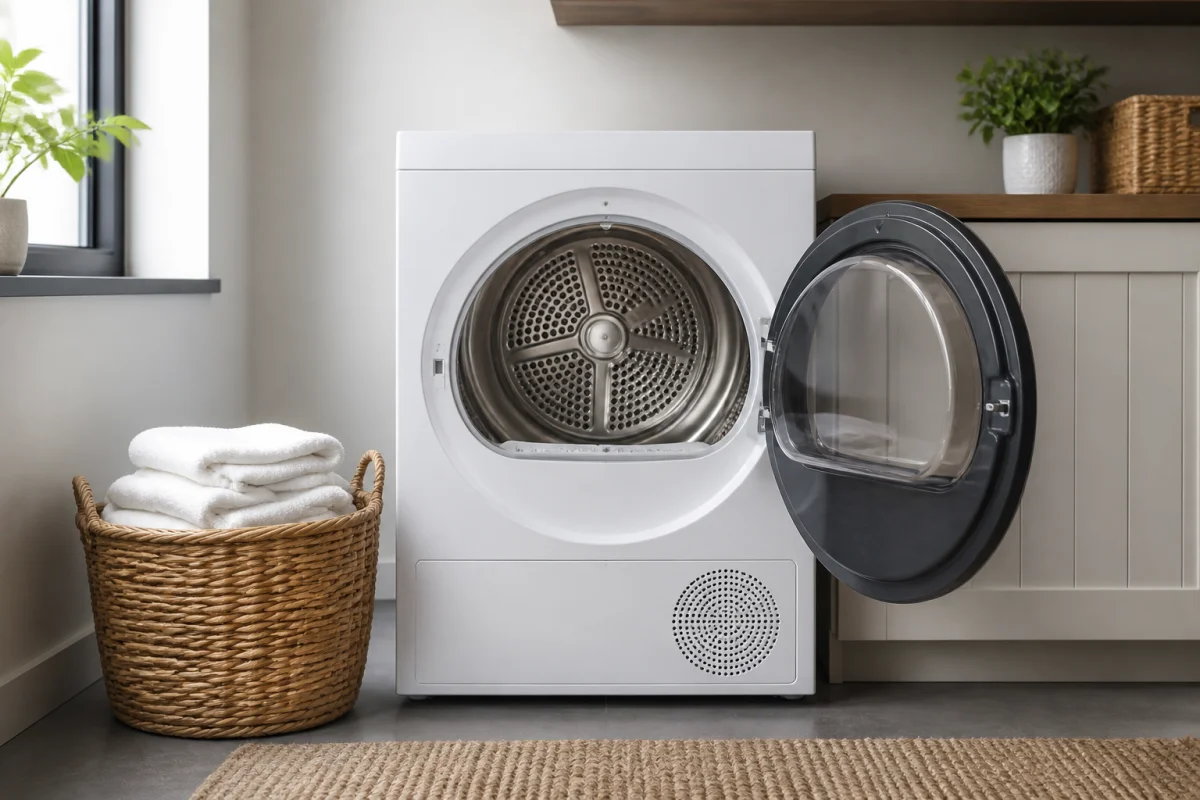
With summer fading and damp days on the way, the tumble dryer comes back into its own. When it is time to buy, the question is nearly always the same: heat-pump or condenser? The price gap on the shop shelf flips once you switch the machine on, because on the same washing one type can use almost twice as much as the other.
How the technology differs
A traditional condenser dryer heats the air with an electric element, passes it through the clothes and then cools it to collect the moisture. It is simple, but power-hungry. A heat-pump model instead recovers the heat from the outgoing air and reuses it, rather like an air conditioner in reverse: it works at lower temperatures, takes a few minutes longer per cycle, but uses far less. It is the same principle that makes heat pumps efficient for heating a home.
The numbers over a year
On an average load, a condenser draws around 3.5 to 4 kWh, while a heat pump uses between 1.5 and 2 kWh, roughly half. At three dried loads a week, a condenser costs about £145 a year to run and a heat pump around £70, a gap close to £75 every year on the same washing. Those figures use a unit rate of about 26p per kWh; a larger household drying more, especially through winter, sees the gap widen further. To match the estimate to your own home, start from your actual rate on our electricity prices today page.
The purchase price and the break-even
A heat-pump dryer costs more to buy, usually a fair bit more than an equivalent condenser. But with yearly savings of around £75, the difference is often recovered in three or four years, and after that it is money saved for the rest of the machine's life, which comfortably passes ten years. The energy label is worth reading in the shop, as it gives an instant sense of how thirsty a model is; our guide to what a kWh actually is helps make sense of the running-cost figures.
Getting more out of it
Whichever type you own, two habits cut the bill. Spin on a high speed in the washing machine: the more water you remove there, the less work is left for the dryer. And clean the filter after every cycle, because a clogged filter drags out the time and pushes up the consumption. One practical point is often missed, too: a heat pump runs at lower temperatures, so it is gentler on fabrics and throws less heat into the room it stands in, a small bonus on the muggy days at the tail end of summer. Our guide to saving electricity rounds up the rest of the laundry-day savings.