
Your electricity bill lands as a single number, but it is really the sum of dozens of appliances, each drawing power at its own rate. Some of that draw is obvious. A lot of it is not, ticking away in the background while you assume nothing is switched on.
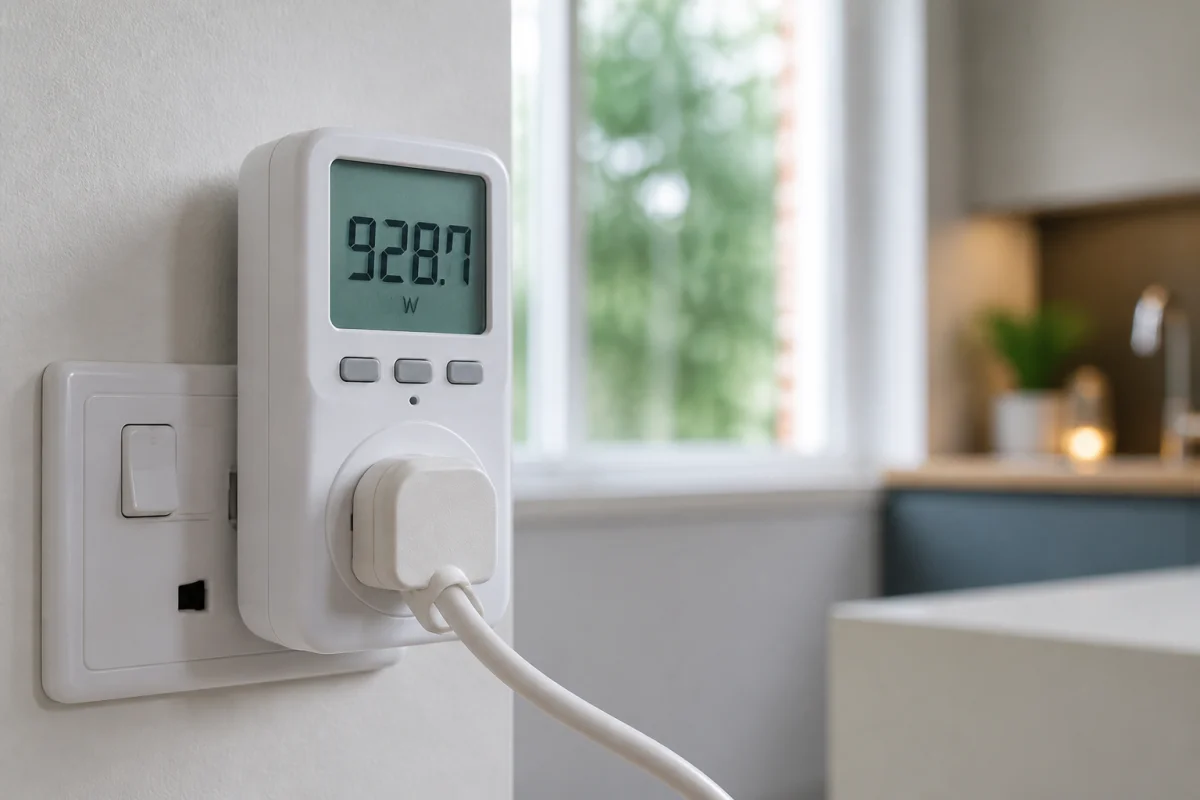
A plug-in energy monitor, sometimes called a plug-in power meter, costs around £15 to £20 and clears up the mystery in an afternoon. It sits between the wall socket and the appliance and measures exactly what that appliance draws, so you stop guessing and start seeing the real figures behind your bill.
How a plug-in energy monitor works
The device is a small block with a three-pin plug on the back and a three-pin socket on the front. You plug it into the wall, plug the appliance into it, and a little screen reports the power being drawn right now in watts, along with a running total of energy used in kilowatt-hours over time.
Because a standard UK three-pin socket is rated to a maximum of 3,680 W (16 A at 230 V), the monitor comfortably covers everything that plugs into a normal socket. What it cannot see is anything hardwired or over that ceiling: a fixed hob, a dedicated immersion water heater or an electric shower is wired straight into the mains, so there is no plug to intercept.
Good to know: leave the monitor in place for a full day before you read the kWh total. A quick glance only catches one moment; a fridge or a boiler cycles on and off, so a full 24-hour sample is the only honest figure to multiply up.
What it reveals: the quiet culprits
The instant-watts reading is where the surprises hide. Plenty of devices you think are off are merely resting, and a handful of them add up to real money over a year on your household appliances.
- The broadband router runs 24 hours a day, every day, and is rarely switched off; a steady 10 W habit is normal.
- The set-top or TV box often keeps its hard drive spinning in standby so recordings still work.
- An old garage or utility fridge is frequently the single worst offender, tripling the draw of a modern one for a few cans of drink.
- The television and games console sip power in standby and wake instantly, which is exactly why they never fully switch off.
- Phone and laptop chargers left plugged in draw a trickle even with nothing attached.
- An electric towel rail or a tumble dryer can be forgotten for hours, and both are heavy users while running.
Working out an appliance's real yearly cost
Once you have a steady watts figure, the maths is simple. Multiply the constant power by the hours in a year and divide by 1,000 to get kilowatt-hours, then multiply by your unit price. The Ofgem price cap sets electricity at 26.11p per kWh from 1 July to 30 September 2026, so a device left drawing power constantly costs more than most people expect. It is worth reading up on what a kilowatt-hour is before you start.
- Read the watts the appliance draws in its normal running or standby state.
- Leave it a full day so on/off cycling averages out, then note the kWh used.
- Multiply by 365 and apply your unit rate to turn a daily figure into a yearly cost.
A gadget you never think about, drawing 30 W around the clock, quietly costs about £69 a year. Put your own numbers into the calculator below to price up any appliance you have measured.
How to choose and use one well
Any basic monitor with a clear watts and kWh display will do the job; you do not need a smart model with an app. What matters is how you use it, and a little method turns a £15 gadget into a genuine list of savings you can act on across the home.
- Move it around the house and test one appliance at a time so you build a full picture room by room.
- Target the always-on devices first, because a small constant draw costs far more over a year than an occasional big one.
- Retire or switch off the worst offenders once the meter has named them, starting with that second fridge.
- Do not judge an appliance on a single reading, as anything that cycles will mislead you in the first minute.
- Do not expect it to measure the hob or shower, which are hardwired and beyond a plug-in meter's reach.
Used this way, the monitor pays for itself many times over. Knowing exactly what each appliance costs is the fastest route to cutting the parts of your bill you never chose to pay, and it pairs neatly with the wider habits in our guide to how to save electricity.