
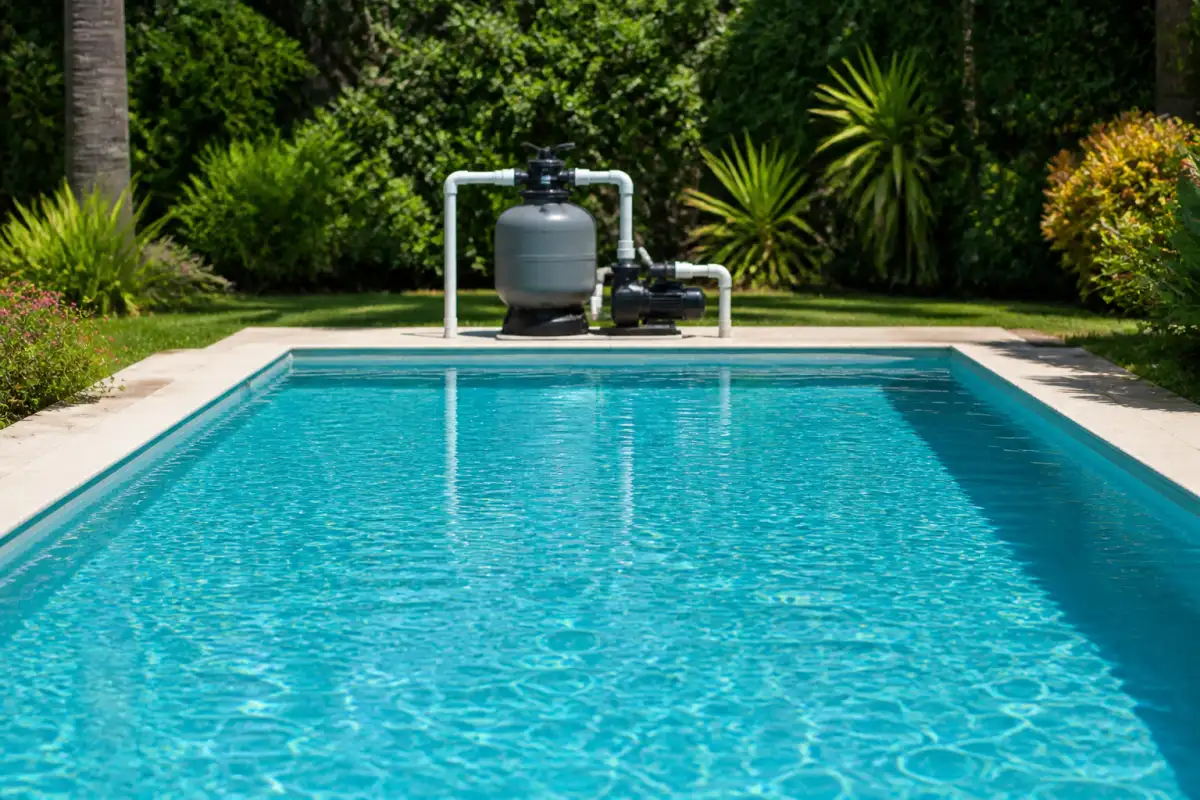
After weeks of warm weather, the water in a pool or hot tub can reach and pass 30 degrees. Lovely for a dip, far less so for the upkeep: once the water climbs above 28 to 30 degrees, algae take off quickly and the chlorine burns through faster, so the pump has to run longer and the bill creeps up without you noticing.
Why the heat changes the rules
Warm water is the perfect home for algae and bacteria, which multiply far faster than they did in early summer. At the same time, heat and sunlight break down chlorine more quickly, cutting your protection just when you need it most. The risk is the classic green tinge that appears overnight. To make up for it, many people crank up the filtration hours, and that is where the bill surprise comes from: the pump is by far the thirstiest part of any pool or hot-tub setup.
The filtration-hours rule of thumb
A handy rule is to run the pump for hours equal to half the water temperature: at 30 degrees that means around 15 hours a day. A 0.75 to 1 kW pump running 15 hours draws roughly 11 to 15 kWh a day, which at about 26p per kWh is close to £3.50 daily, so the hottest month can easily add £90 to £100 in filtration alone. Running the filter through the middle of the day helps, as that is when algae grow fastest. A hot tub's heater adds more still, so dropping the set temperature a degree or two matters.
How to keep it clean without the bill spiralling
A few habits cut both the algae risk and the consumption. Keep the chlorine at the right level and use a preventive algaecide through the warmest weeks: well-treated water needs less filtering. Cover the pool or tub overnight, which limits evaporation and keeps leaves and pollen out. Clean the basket and filter often, because a dirty filter forces the pump to work harder for the same result. And if you are thinking of replacing an old single-speed pump, a variable-speed model uses far less for the same filtration, a difference our guide to saving electricity puts in context.
Watch when it runs, not just how long
Since the pump runs for hours, the time of day it does so affects the cost. On a time-of-use tariff such as Economy 7, shifting part of the filtration to the cheaper overnight hours trims the bill without changing anything about the cleaning. It is worth checking your rates on our electricity prices today page so the filtration lands when power is cheapest.