
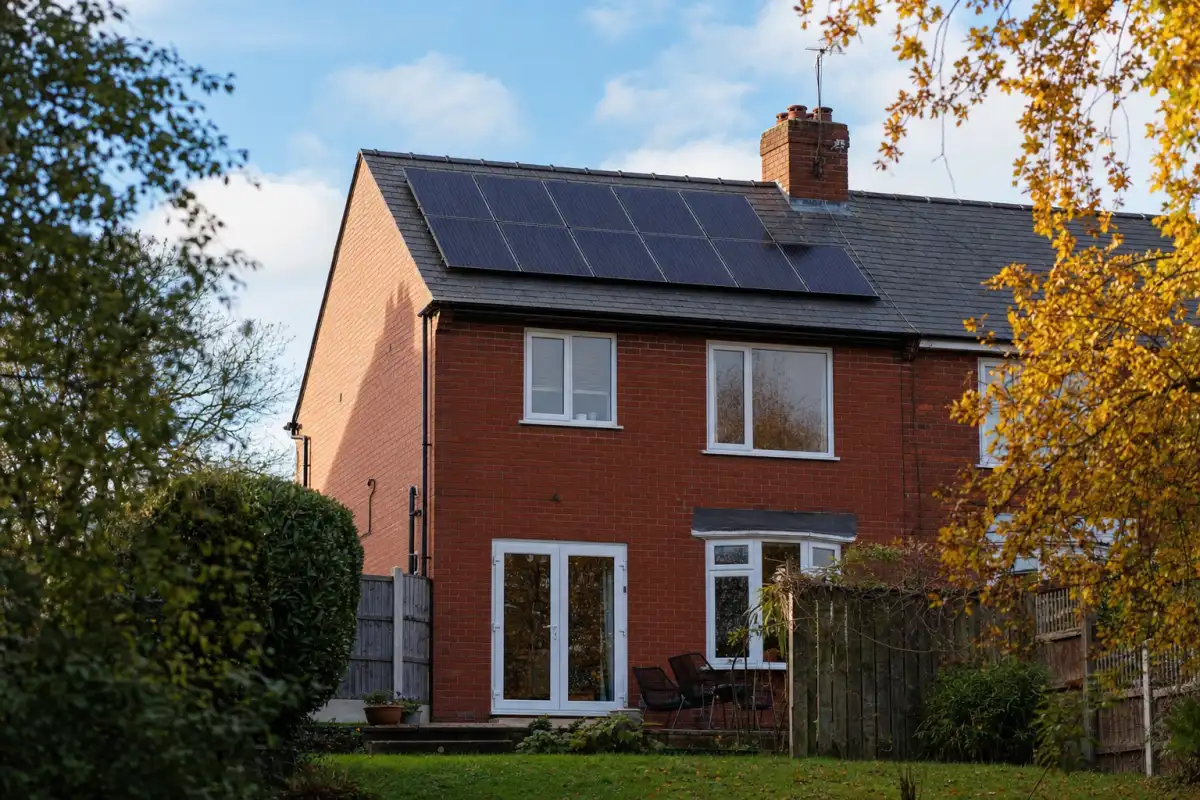
The panels stay on the roof, so most people assume the money question answers itself. It does not. Between the last meter reading and the day the keys change hands there can be a full quarter of generation sitting unclaimed, and nothing in the process splits it for you.
The reading on completion day settles it, not the calendar
A feed-in tariff payment is made against a meter reading you send your licensee. It covers a set period, and it is paid to whoever is registered as the generator. Nothing apportions it when a house sells: the licensee pays out on the reading it is given, to the name on the account at that point.
So the buyer inherits the current period, and the seller's months inside it go with the house, unless both sides agree otherwise in writing before exchange.
The only thing that turns those months back into money is a meter reading taken on completion day and an apportionment written into the contract. Handled by solicitors, it is a line of correspondence. Raised afterwards, it is a favour you are asking of someone who has already moved in.
What passes with the house, and what has to be told
Four things sit behind a solar roof, and only some of them move with it.
The accreditation is the valuable one, and the step people skip is the notification. The licensee has to be told the generator has changed, and Ofgem's Central FIT Register is updated off the back of that. Until it is, the payments keep going to the seller. If any of this is new, read how the feed-in tariff pays a household generator before you touch anything.
Cancelling the tariff is the mistake with no way back
Moving house triggers a reflex: close the accounts. Do that to a feed-in tariff and the roof loses an income stream that cannot be recreated, because the scheme closed to new applicants in 2019.
The terms still running are long. Solar accredited before August 2012 was given 25 years, and installations from that date 20 years, with the rates uprated for inflation every year. An early array can have well over a decade of index-linked payments left, and that is worth more to a buyer than the hardware on the roof. Anyone starting today gets the Smart Export Guarantee and the rates suppliers set under it instead, and that pays for exported units only.
The rent-a-roof case, which stops sales rather than slowing them
Some roofs were fitted free of charge a decade or more ago under a rent-a-roof or solar lease arrangement. The household got the electricity; an investor kept the feed-in tariff and took a long lease of the roof space, registered against the title.
That lease binds the buyer, so it becomes a conveyancing item rather than a detail.
- Mortgage lenders set conditions on these leases, and a lease that fails them can be refused outright, which puts the sale on hold until it is varied.
- The system owner sometimes cannot be traced, after a chain of assignments or a company that no longer trades, and there is then nobody to sign a consent or a variation.
- The seller often has no paperwork at all, because the installer handled everything and the household simply enjoyed free daytime electricity.
Ofgem publishes dispute resolution guidance for the feed-in tariff, which is the route when the question is who the registered generator is. A private argument about who keeps the money for a period is a civil matter between the parties, which is exactly why it belongs in the contract.
What to settle before exchange
- The five items that avoid an argument later
- State the position on the Property Information Form, including whether the panels are owned outright or sit under a lease.
- Hand over the FiT statements and the MCS certificate, since the buyer needs both to take the account on.
- Photograph the generation and export displays on completion day, with both parties present. It costs nothing, and it is the evidence everyone will accept.
- Put the apportionment in the contract, or accept that the whole period goes to the buyer.
- Notify the licensee straight away, so the register is corrected before the next payment run.
None of it is difficult. It is simply not on anybody's standard checklist, which is why the money quietly ends up on one side of the table rather than the other.