
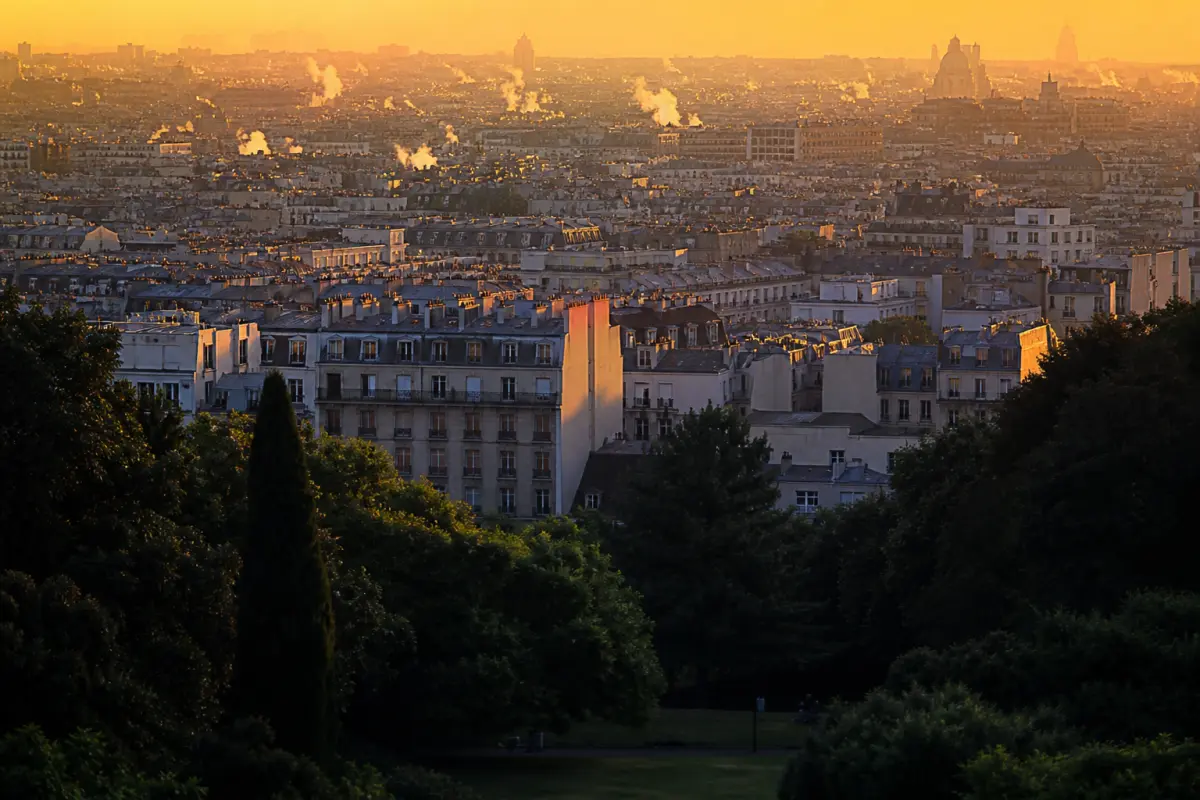
Anyone who spends a summer in central London knows the feeling. The countryside starts to cool down after sunset, yet the pavements and buildings keep giving off heat well into the night. It is not just in your head. The effect has a name, the urban heat island, and it describes how built-up areas stay warmer than the green land around them.
The gap is real and it is measured. On an ordinary summer night London runs around 4°C warmer than the countryside around it, and during extreme spells that difference has reached as much as 10°C. The night is when cities suffer most, because they cannot shed the heat they soaked up during the day.
How much hotter the city gets
London has one of the most extreme urban heat islands of any major city in the world. Central boroughs regularly sit about 4°C above the surrounding countryside at night, and in the worst-affected spots the effect can add five or six degrees to night-time temperatures.
It varies street by street, too. One survey found Kilburn and South Hampstead, with little greenery, running more than 7°C hotter than Regent's Park a short walk away. The more concrete and the less greenery an area has, the warmer its nights.
Good to know: a "tropical night" is one where the temperature never drops below 20°C. These are the hardest on older residents, young children and anyone in a top-floor flat, because the body never gets the chance to cool down and recover.
Why the city stops cooling down after dark
The main culprit is what cities are built from. Concrete, tarmac and roofing soak up the sun all day and release it slowly once it goes down. Soil and grass cool quickly; a road or a brick wall keeps radiating warmth for hours.
But the material is only part of the story. The shape of the city and the lack of greenery matter just as much:
- Narrow streets between tall buildings trap warm air and leave only a thin strip of sky for the heat to escape into.
- Too few trees and too little open soil rob the city of the cooling that shade and evaporation provide, which tarmac simply cannot.
- Air conditioning running in every building dumps the heat it removes from rooms straight back onto the street.
That is why greenery counts for so much: planting and green space are among the few measures shown to bring city temperatures down for real.
What it means for cooling and your bill
When the temperature stays high overnight, more people reach for cooling. A portable air conditioner draws around 1,200 watts, so it runs at roughly 1.2 kWh an hour; a fan uses a small fraction of that. Over a long hot spell the difference on your bill is stark.
Here is what cooling a single room for twenty warm nights costs at around 26p per kWh:
Before you switch a unit on it is worth knowing exactly what air conditioning costs to run. And there is a twist: every unit dumps the heat it removes from a room back onto the street, so in a city with hundreds of thousands of them running at once, air conditioning feeds the very problem it is meant to solve.
What actually helps
At city scale the answer is clear: more trees, more green space, and lighter, reflective roofs that bounce sunlight away rather than store it. At home, small habits make a real difference to comfort and to your energy consumption across the season.
Here is what to do, and what to avoid, on the hottest days:
- Keep blinds and curtains closed during the day, and open the windows early in the morning when the air outside is coolest.
- Insulate the loft and cool one room rather than trying to cool the whole house at once.
- Set any cooling no lower than you need and keep the filters clean so it does not overwork.
- Do not run the air conditioning with the windows open: you are paying to cool the street.
- Do not leave cooling on all day in an empty house: a timer or a fan covers most of the need for pennies.
On all but the very hottest nights, a fan and good ventilation are often enough, and keeping an eye on appliance running costs helps you see where the money actually goes.