
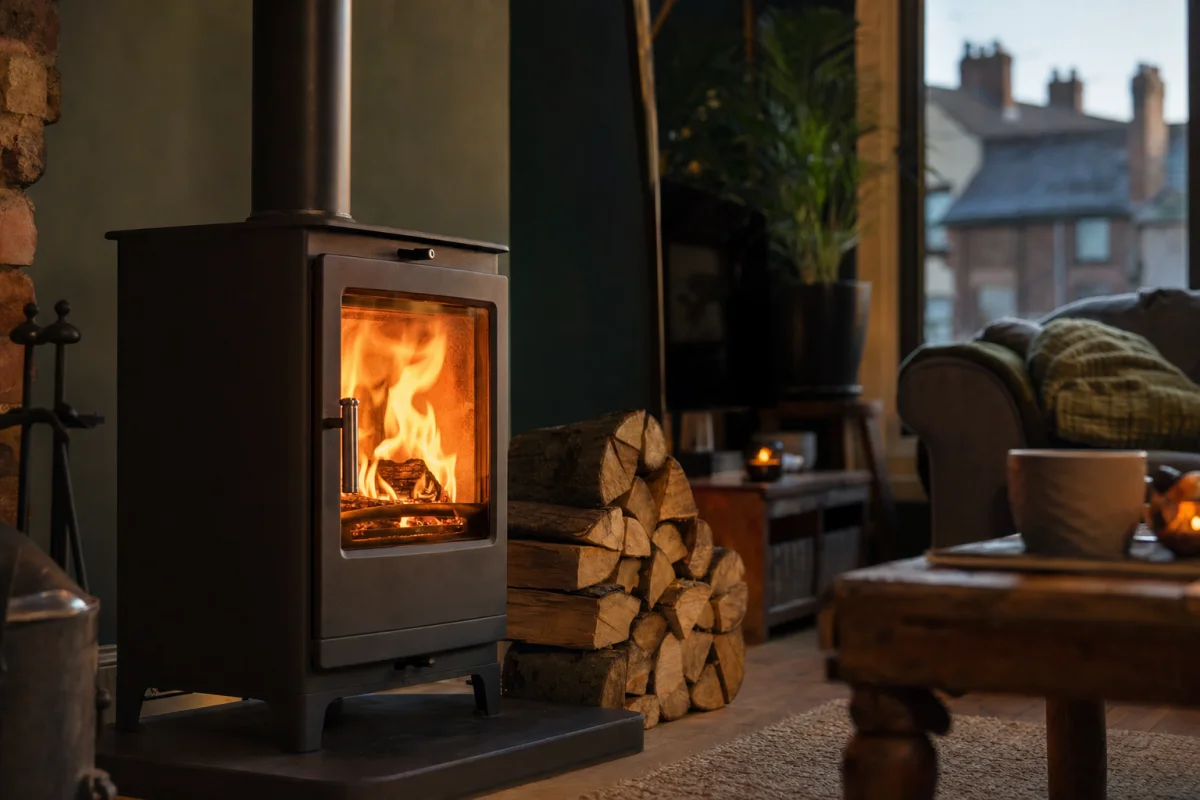
Nothing has changed yet for people who already own a wood burner. The Government has not published its response to the stove consultation, and its proposals would apply to new stoves only. The rules already in force, mainly those for smoke control areas, still apply this winter.
Where the Government's stove reform stands
No decision has been taken yet. The UK-wide consultation on solid fuel burning ran from 22 January to 19 March 2026, and no response has been published since. Defra ran it jointly with the Scottish Government, the Welsh Government and the Northern Ireland departments.
On 8 September 2026, Defra minister Emma Hardy told Parliament: “We intend to publish the consultation response in due course.” Until a response appears, new emission limits, labels and penalties remain proposals.
What the proposals would change, and for whom
The proposals target new stoves and the fuel sold for them, not stoves already in people's homes. Domestic burning produced 20.1% of the UK's fine particle (PM2.5) emissions in 2023, according to the consultation document. If adopted, its main measures would be:
- A tighter smoke limit for new stoves: 1 g of smoke per hour instead of 5 g/h, each plus 0.1 g per 0.3 kW of output. It would apply in Great Britain, and in Northern Ireland only in smoke control areas;
- A lead-in of 3 to 5 years: the limit would take effect that long after the legislation is made;
- A mandatory emissions label on new stoves, shown next to the energy efficiency label;
- Higher fixed penalties for suppliers: up to £2,000 instead of £300 for breaching the solid fuel regulations, most likely in England only.
Installed stoves would not be affected. The document says that appliances “already installed or placed into the market before any new legislation comes into force would not be affected”. Defra cites industry data suggesting 70% of stoves tested since 2018 would already meet the new limit.
The Mayor of London's request is not a ban
The Mayor of London wants the Government to consult on new powers, but his request does not change the law. His consultation response of 19 March 2026, released by the Greater London Authority on 20 October 2026, called for “time-limited area-specific bans for high pollution areas”.
The same submission says this “would not amount to a ban on domestic burning”. Defra's consultation contains no area-based ban. For now, Londoners follow the same rules as the rest of England.
What is legal today in a smoke control area
In a smoke control area, your chimney must not release smoke. Wood can be burned only in a Defra-exempt appliance, using the fuels its manufacturer specifies. Otherwise only authorised smokeless fuels such as anthracite are allowed, according to GOV.UK. Your council can tell you whether your street is covered.
Two separate penalties are often confused:
- Smoke from a chimney: in England and Wales, a civil penalty of £175 to £300 under the Clean Air Act 1993. You get 28 days to object to the notice, and can appeal;
- Buying unauthorised fuel: in England, you can be fined up to £1,000 for buying it to use in a non-approved appliance in a smoke control area.
The £1,000 figure applies to buying the fuel, not to chimney smoke. In England, sellers who deliver unauthorised fuel into a smoke control area face an unlimited fine.
How the rules differ across the UK
Penalties and rules on wood depend on where you live. Wales switched to civil penalties of £175 to £300 on 31 July 2025. Scotland keeps a criminal offence, with fines of up to £1,000 and its own list of authorised fuels.
The Ready to Burn rules apply to sellers in England, not to households. Wood sold for home burning in units under 2 m³ must be certified as authorised wood, with no more than 20% moisture. Larger volumes need a notice about drying the wood.
How to check whether you live in a smoke control area
Start with Defra's smoke control area map, which covers England only. Defra says its data is “indicative only” and that you should always confirm with your local authority. Treat the map as a first check, then ask your council for a definite answer.
- Search your postcode on the map to see whether it falls inside a smoke control area;
- Contact your council, usually its environmental services team, to confirm;
- Check your stove against Defra's exempt appliance list before burning wood. The Defra helpline is 03459 33 55 77.
Our guide to keeping your home warm this winter covers other options.