
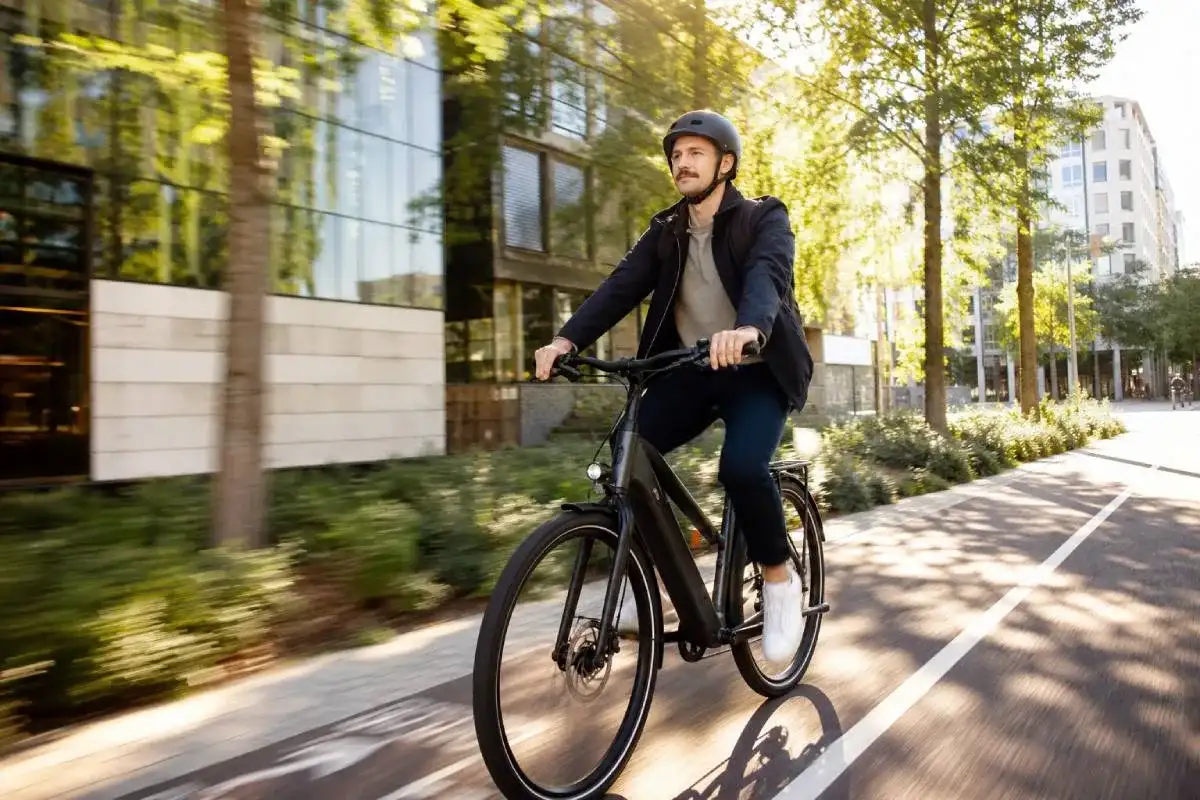
A small dongle bought online, a setting changed in an app, and the e-bike that used to stop helping at the speed limit keeps pulling. For plenty of riders, it seems like a harmless upgrade for the commute.
It is not. That tweak changes what the bike is in law, and with it the insurance that was quietly protecting you every time you rode.
Two limits that keep an e-bike legally a bicycle
In Great Britain, an electric bike is treated like an ordinary pedal cycle only if it qualifies as an electrically assisted pedal cycle, or EAPC. GOV.UK sets out the conditions, and they all have to be met at once:
- Pedals that can propel it: the motor assists your pedalling.
- A motor of no more than 250 watts continuous rated power.
- No motor assistance above 15.5mph: you can go faster, but only on leg power.
Meet them, and anyone aged 14 or over can ride it without a licence, registration, tax or insurance. If you hit a pedestrian, the personal liability section of a typical home contents policy usually treats you like any other cyclist. One common confusion: the motor's power is not the battery's capacity. A 500Wh battery can sit on a perfectly legal 250W bike.
One mile an hour too many, and the bike becomes a motorbike
If the motor can push the bike beyond 15.5mph, or delivers more than 250W, it stops being an EAPC. GOV.UK is clear that it is then classed as a motorcycle or moped, whether the change came from a plug-in chip or a software unlock.
On top of that, a bike that can be propelled without pedalling, or that breaks the EAPC rules, needs vehicle approval. A home-tweaked bike almost never has it, so in practice it cannot be put on the road legally at all.
Conversion kits follow the same logic. A kit fitted to a normal bike is fine if it stays within 250W and 15.5mph. A twist-and-go throttle that moves the bike without pedalling needs approval, even with a small motor.
The tweak costs you before any accident happens
Riding a motor vehicle without insurance is an offence under the Road Traffic Act 1988. It typically means a £300 fixed penalty and six points on your licence, or a court case, and the police can seize the bike. Riding with no licence adds a further offence.
The real danger is financial. Home insurance liability cover excludes motor vehicles, so a derestricted bike leaves you personally liable for anyone you injure. The Motor Insurers' Bureau can compensate a victim of an uninsured vehicle, but it can then pursue the rider for the money. A serious injury claim can run to life-changing sums.
Private e-scooters show the same logic from the other side: they are motor vehicles, no policy can cover them on the road, and they remain illegal on public roads.
Theft, damage, a fall on your own: what liability cover never pays
Even on a fully legal e-bike, the liability section of your home insurance only covers harm you cause to other people. Your own bike and your own injuries are a separate matter, as our guide to what home insurance does not cover explains.
- Theft away from home: needs a bicycle add-on to contents insurance or a dedicated cycle policy.
- Accidental damage to the bike: not covered by liability cover.
- Your injuries in a solo fall: need personal accident cover.
- Anything on a derestricted bike: most cycle policies exclude modified bikes too.
Before any claim, insurers usually expect a lock meeting their stated standard, often a Sold Secure rating, plus proof of purchase and a police crime reference number. Check your policy names e-bikes explicitly, and leave the speed limiter alone.