
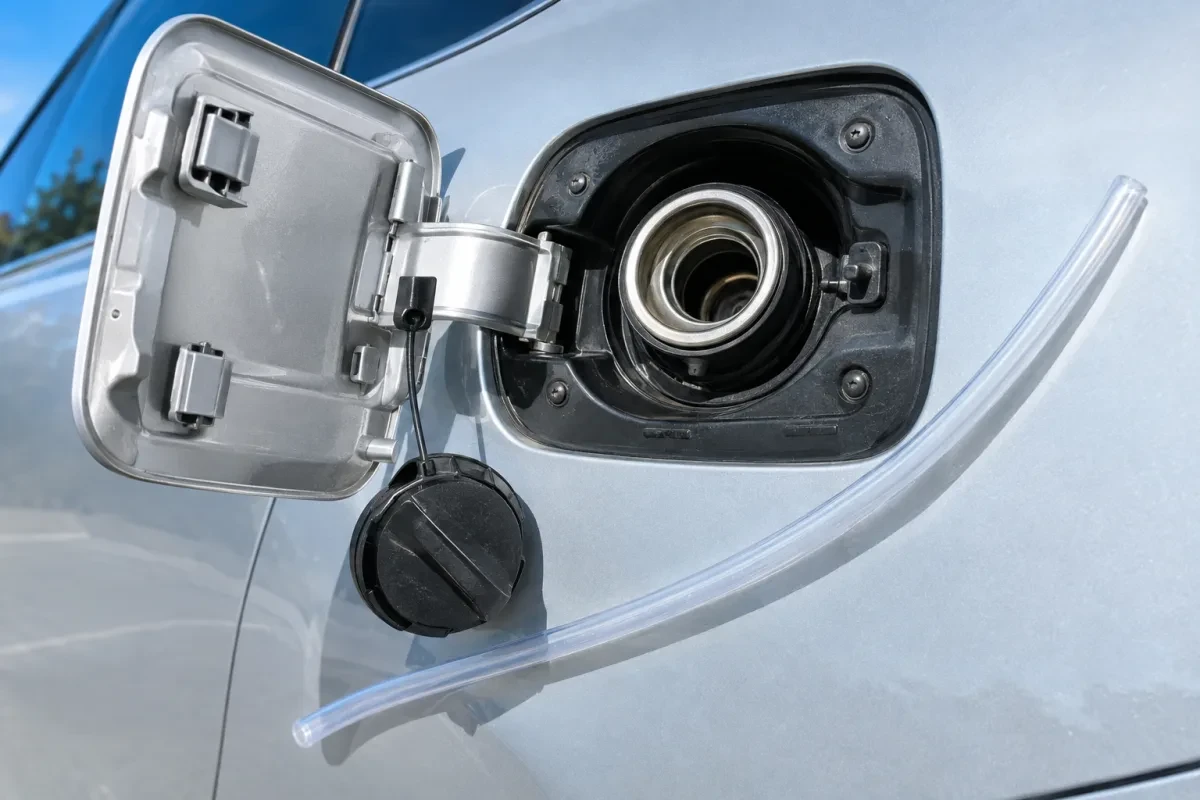
The fuel gauge reads empty on a car you filled two days ago, there is a puddle under the rear wheel and a sharp smell of diesel on the drive. Siphoning used to be a nuisance. At current pump prices it is a theft worth more than £100 a time, and the damage thieves leave behind can cost more than the fuel itself.
A full tank is now worth stealing
The government's weekly road fuel figures put the UK average for diesel at 197.6p a litre in the week commencing 28 September 2026, up 2p in a week. In the week of 22 September 2025 it was 142.0p. That is 55.6p more per litre in a year, a rise of about 39%. Petrol averaged 173.5p in the same week of 2026.
The value of what sits in your tank has risen in line, and the dearer each litre gets, the more a parked car with a full tank is worth to a thief.
A year ago the same 55 litres of diesel cost about £78. These are national averages for one week, so your local forecourt may be a few pence either side.
Who gets targeted, and what gets broken
Thieves go where the volume is and the risk is low.
- Vans and lorries: big tanks, long hours parked on streets or industrial estates, and filler caps that sometimes have no lock.
- Forecourt and depot tanks: large quantities taken at night with pumping equipment.
- Cars on driveways and at motorway services: classic siphoning, or a quicker and more destructive method.
On a modern car a tube often cannot get past the anti-siphon features of the filler neck, so thieves force the fuel flap, cut a fuel line or drill a hole in the tank, which turns a fuel theft into a repair bill that can run to several hundred pounds.
What your car insurance actually pays
Three things are at stake, and they are treated very differently. The damage to the car is covered on a comprehensive policy, as damage caused by theft, attempted theft or malicious damage. Third party, fire and theft protects against the car itself being stolen, not against someone draining it, and third party only pays nothing towards your own car.
The fuel is the part almost never paid for: it is a consumable, and most policies exclude it outright. And the excess comes off whatever the insurer pays for the repair.
The excess decides whether to claim
Get a repair quote before you ring the insurer, then compare it with the excess on your schedule. If the difference is small, paying yourself is often cheaper.
A malicious damage claim usually counts against your no claims discount even though you did nothing wrong, because the insurer has nobody to recover the money from. One such claim typically costs two years of discount unless it is protected, and the higher premium can outlast the payout. Our no claims bonus guide explains how protection works.
Report it to the police first
- Get a crime reference number: without one, a claim for damage from fuel theft is very likely to be refused.
- Photograph everything: the flap, the cap, the hole or cut pipe, fuel on the ground and the gauge on the dashboard.
- Keep your last fuel receipt as proof of what was in the tank.
- Never round up the litres or the damage: an exaggerated claim can void the whole policy.
Prevention is cheaper. Fit a locking fuel cap, park in a lit or locked space, and do not brim the tank before leaving the car for a week at an airport. For vans and fleets, an anti-siphon device in the filler neck is worth the cost. The car insurance guide sets out what each level of cover includes before your next renewal.