
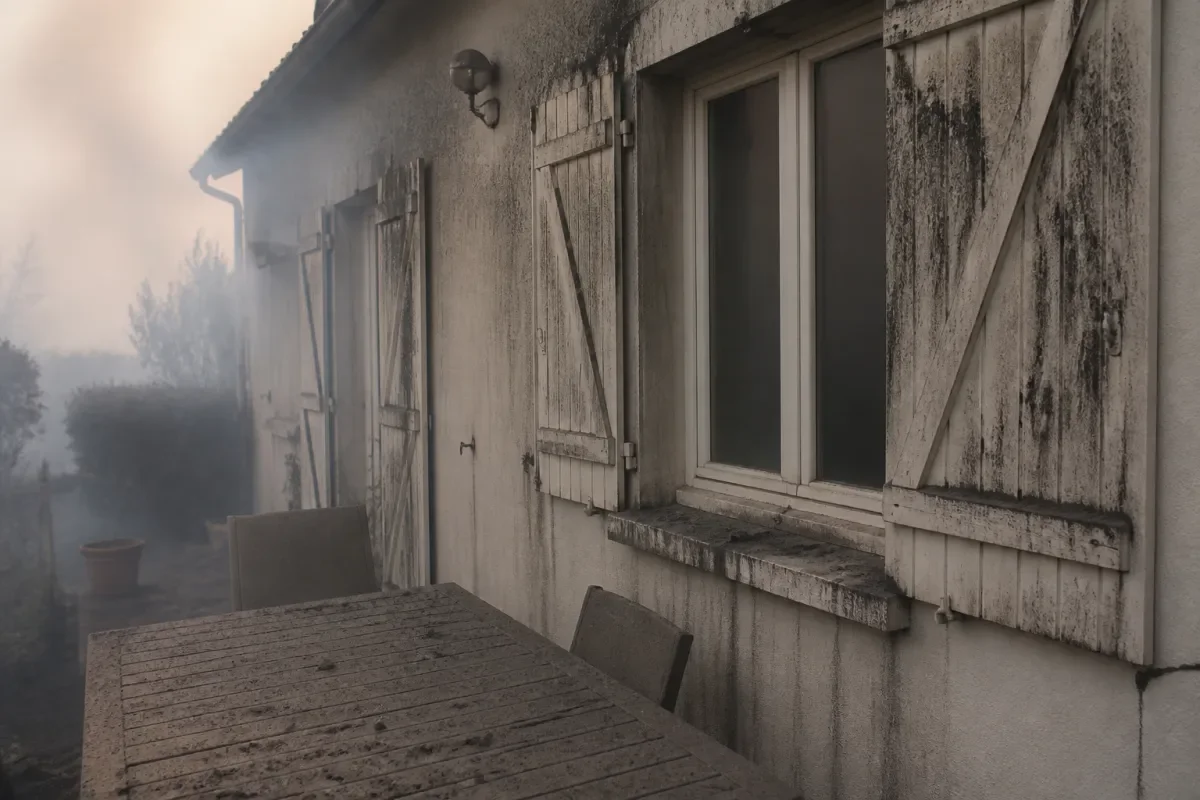
The fire never touched your home. It broke out next door, in the flat below, or on the moorland behind the estate, and the fire service had it out within hours. Yet the walls are grey, the curtains reek and a fine black film covers everything from the sofa to the kitchen cupboards.
Damage without flames affects far more homes than the fire itself. Your home insurance can pay for it, but only if one condition is met, and only if the claim is handled in the right order.
What counts: a real fire, even one that started elsewhere
Fire is one of the core insured events in UK buildings and contents policies, and many list smoke alongside it. The condition is that the damage comes from an actual, accidental fire, not from heat alone, and not from soot that built up gradually.
The fire does not have to start in your home. Smoke and soot drifting from a neighbour's house or a nearby blaze fall within the fire cover of your own policy, as long as the link to that fire is clear. A fire attended by the fire and rescue service makes that link easy to show.
Who caused it rarely changes who pays first. Under a law dating from 1774, a neighbour is not liable for a fire that started accidentally on their property, unless they were negligent. You claim on your own policy, and your insurer decides whether to pursue anyone else.
Two cases fall outside. Scorching from heat with no fire, such as a hot pan marking a worktop, is only covered under accidental damage. Soot from a poorly maintained chimney of your own is treated as wear and tear.
Walls, furniture, fabrics: what can be paid for
Smoke damage is diffuse, so claims cover a long list of small items as well as the obvious ones:
- The building: specialist cleaning, repainting walls, ceilings and render, clearing soot from gutters and roof.
- Contents: furniture, curtains, bedding, carpets and clothes, cleaned by specialists or replaced.
- Deodorising: removing the smell can take professional treatment of the whole home.
- Somewhere to stay: many buildings policies pay for alternative accommodation if the home is unfit to live in.
The garden is a different matter. Fences, garden furniture and anything else outdoors may only be covered up to a limit, if at all.
Underinsurance hurts most with smoke, because it touches nearly everything you own. If your contents are insured for £30,000 but are really worth £40,000, an insurer applying an average clause pays three quarters of each claim.
Report fast and prove it: the habits that protect the claim
Policies ask you to report damage as soon as reasonably possible. If you were evacuated or away, start the day you get back. The order in which you act matters more than speed alone.
- Photograph everything before cleaning: wide shots of each room and the outside walls, close-ups of soot, each damaged item.
- Keep a sample of the deposit, or a soiled cloth, if you have to clean urgently.
- Get the fire's details: date, address and the fire and rescue service's incident reference.
- Call the insurer and follow our guide to making a home insurance claim.
- Book no decorators until the insurer or its loss adjuster agrees, since many insurers send their own specialist cleaners.
Policies that look alike, payouts that do not
Two policies at the same price can pay very differently for the same smoke damage, depending on the settings in the table above. The average contents-only premium was £118 a year in the second quarter of 2026, according to the ABI, so the gap between a thin and a solid policy is often small.
It takes ten minutes to check your schedule for the sum insured, the excess and how contents are settled. Our guide to contents insurance explains how to value what you own, and it is worth doing before the next fire, not after.