
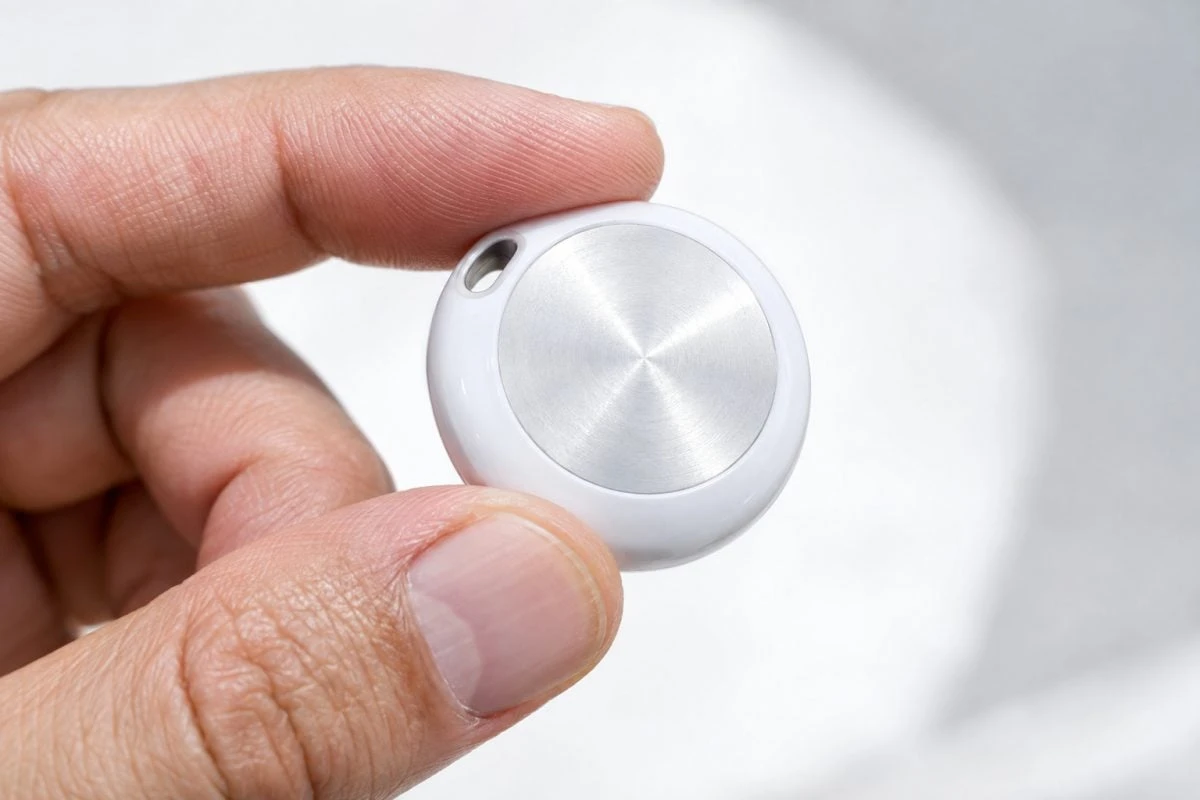
They are the size of a large coin and they have become a standard purchase before a holiday or a new bike. On Apple's UK store, an AirTag costs £29, or £99 for a pack of four. The promise is to find almost anything from your phone. The reality depends heavily on what you attach it to, and on how many people happen to walk past it.
No GPS and no SIM card: what is really inside
A Bluetooth tracker contains a button battery that lasts more than a year, a small speaker, a Bluetooth chip and, on recent models, an ultra-wideband chip for precise finding at close range. Its direct range is a few tens of metres.
The tracker never works out its own position. It sends out an encrypted identifier that nearby smartphones pick up, and those phones report its location using their own mobile data. The busier the place, the fresher the position. Somewhere remote, nothing comes back at all.
Luggage in the hold: where it has become essential
A bag is only found if the airline's system has scanned it. The tracker locates a case the system has lost sight of, after a missed connection or on a forgotten trolley. A growing list of airlines, British Airways among them, now accept a temporary location link that expires once the bag is returned, or after seven days.
- Report the loss at the desk before leaving the airport and keep the file reference on your Property Irregularity Report.
- Put the tracker in Lost Mode with a phone number where you can be reached.
- Generate the share link and paste it into the airline's form along with the reference.
- Check that your mobile plan covers your destination, as roaming outside Europe can be costly.
Bikes: finding, yes; deterring, no
A thief does not know the tracker is there, and that is the point. Hide it in the seat post, a hollow reflector or a sewn-in pouch. Some owners add a decoy tracker in an obvious spot. Register the frame number on BikeRegister, and never go to recover the bike yourself: give the location to the police.
Cars: the best and the worst use
Your phone already remembers where the car's Bluetooth disconnected. The tracker earns its place in a multi-storey car park, where that last position is often just the entrance.
The worst use is hiding one on someone else's car. Since 2024, iOS and Android share the same "unknown tracker" alert across brands. Tracking a person without their consent can amount to stalking, a criminal offence in the UK.
When a tracker is not enough: real GPS
A GPS tracker works out its own position and sends it over a SIM card, so it works in a remote lay-by too. It needs a subscription and recharging every few days or weeks. Choose one for coverage where the vehicle is parked, and avoid 3G-only models: 3G has been switched off across the UK, and 2G will go too, by 2033 at the latest.
Three blind spots no tracker fixes
- Density: in a village, a tracker can stay silent for days.
- The battery: an informed thief removes it in three seconds.
- The delay: a position is never live, a few minutes old in a city, several hours elsewhere.
It does not deter theft or replace insurance, so check your contents insurance for bikes and luggage away from home. Apple and Google run separate networks, so buy for your phone first, then look at ultra-wideband, speaker volume and a replaceable battery.