
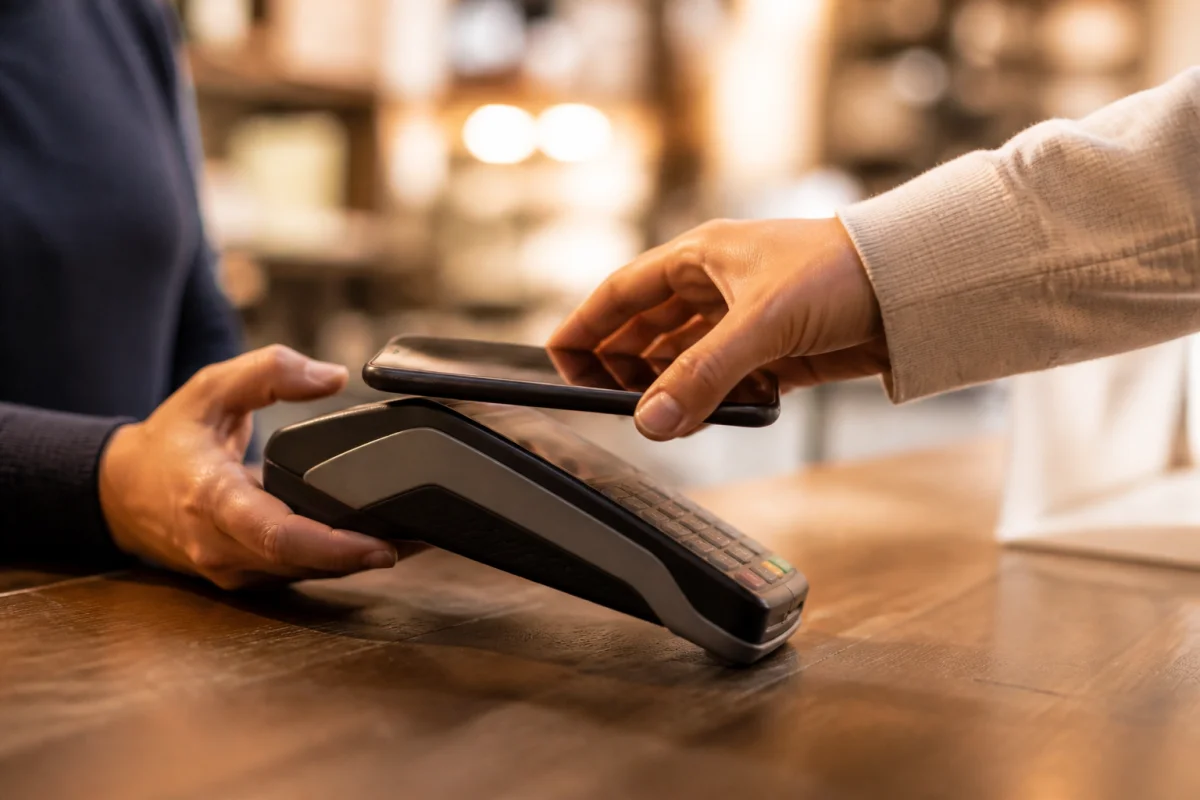
Paying with your phone abroad has become second nature: you hold it near the terminal, glance at the screen, and you are done. It feels frictionless, and it usually is. What many travellers miss is that a phone wallet is not a separate account with its own rules. It simply presents the card you have loaded into it, which means that card's foreign-transaction charges and its exchange rate follow you wherever you tap. The convenience is real, but so is the small print, and one prompt at the till can make the same purchase noticeably dearer.
How paying by phone abroad works
When you add a bank card to a phone wallet, the phone stores a secure stand-in for that card rather than the real number, a process known as tokenisation. Each payment is approved by your fingerprint, face or passcode, so nothing is charged without your say-so and there is no card left on the counter for a stranger to photograph.
Because the underlying card does the paying, the money still moves through that card's network and lands on that card's statement. The phone changes how you tap, but the account behind it still sets the fees and the rate you actually get. Choosing which card to load is therefore the first decision that affects the price.
The "pay in pounds" trap
Abroad, a shop terminal or a cash machine will often ask whether you want to be charged in the local currency or in pounds. Being offered your home currency sounds helpful, and that is exactly why it works. This is Dynamic Currency Conversion, and choosing pounds hands the conversion to the retailer or the machine operator, who applies their own unfavourable rate and can add a mark-up on top.
The safe answer is almost always to pay in the local currency of the country you are standing in. That lets your own card network handle the conversion at its rate, which is typically far closer to the real market rate than anything the terminal offers.
Fees and exchange rates
Even after you dodge the DCC trap, two costs remain worth checking before you travel:
- Foreign-transaction fees, a percentage some cards add to every payment made outside the UK.
- The network exchange rate, set by the card scheme, which decides how many pounds a local-currency purchase becomes.
- Cash-machine charges, which can apply separately when you withdraw notes abroad, on top of any operator fee shown on screen.
A card built for spending overseas may charge no foreign-transaction fee at all, while an everyday card can quietly add a percentage each time. Loading the cheaper card into your wallet before you leave is the simplest saving available.
Tips to pay safely by phone
A common worry is whether payments need a signal. For an in-store tap, the answer is no: the payment itself works offline, so a dead zone or a pricey roaming situation will not stop you paying at the counter. You do need connectivity for the surrounding tasks, such as opening your banking app, receiving confirmation messages or checking a balance, which is where a data plan or an eSIM for travelling abroad earns its place.
A few habits keep things cheap and secure:
- Always choose the local currency when a terminal or cash machine offers you pounds.
- Load your lowest-fee card into the wallet before departure, and set it as the default.
- Keep biometric or passcode approval switched on, so no payment goes through without you.
- Turn on transaction alerts so you can spot an unexpected charge straight away.
Handled this way, paying by phone abroad keeps its genuine advantages, quick, contactless and nothing on show, without the hidden premium that a single careless tap on "pay in pounds" can add.