
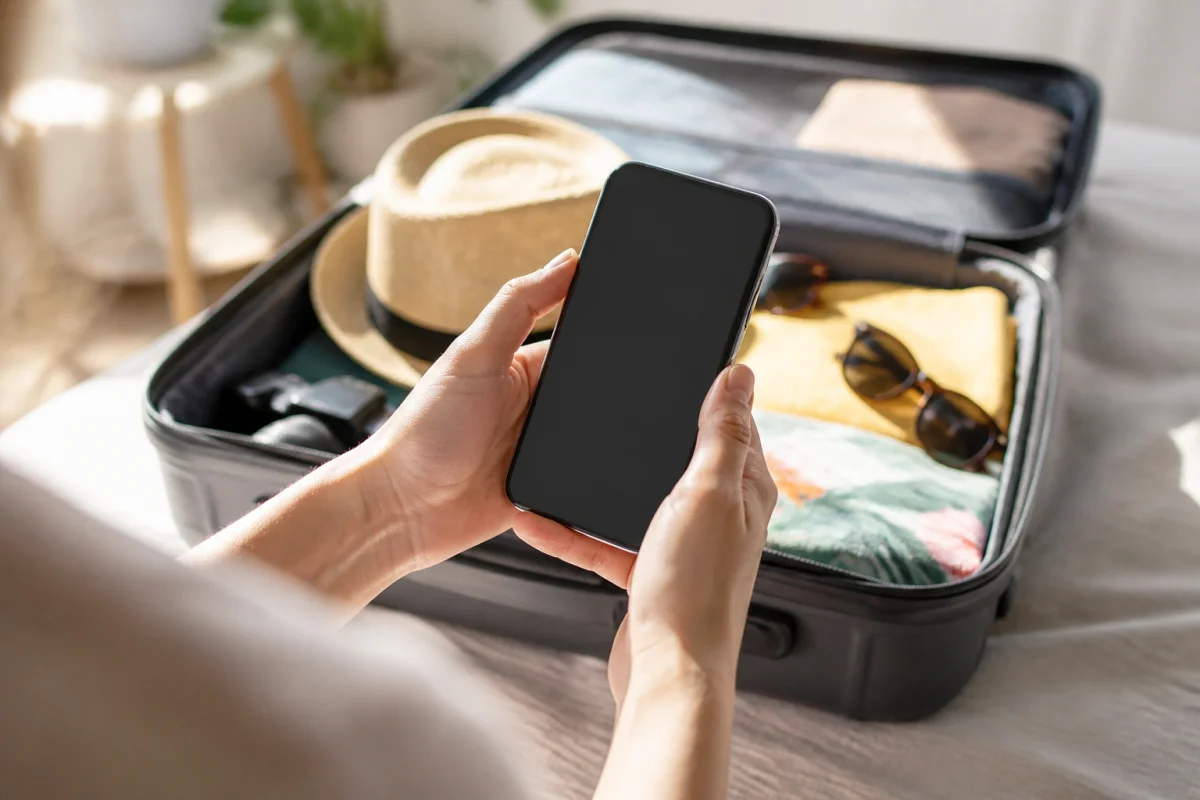
A holiday can be planned to the last detail and still be derailed by the one thing most of us leave until we are already at the gate: the phone in our pocket. A little preparation the night before you fly costs nothing and saves a great deal of fumbling later. The good news is that almost everything that goes wrong abroad can be headed off with a short routine you run before you leave the house. Here is the checklist worth keeping.
Sort your roaming before you fly
Start with how your phone will actually get online, because that decision shapes everything else. Some plans include a set allowance in the EU, others add a daily fee once you land, and a few charge steep rates outside a short list of countries. Check yours before you travel rather than after the first bill.
If your plan is expensive abroad, or you are heading further afield, a travel eSIM is often the cheaper and calmer option. It is worth reading up on how an eSIM works and when it makes sense so you can set it up at home on wifi, not in a queue at arrivals.
Back up and secure your phone
Assume, just for a moment, that your phone will be lost or stolen while you are away. That single mental exercise tells you exactly what to do before you go, and the goal is that losing the handset costs you money but never costs you your photos and data.
- Back up your photos and files to the cloud, and confirm the last backup actually completed.
- Turn on Find My (or Find My Device) so you can locate, lock or remotely wipe the phone.
- Set a strong passcode and switch on face or fingerprint unlock.
- Note down your device details and your network's lost-phone number, kept somewhere other than the phone itself.
Download what you will need offline
Signal abroad can be patchy, and you do not want to be burning roaming data simply to reload a map on a street corner. The fix is to pull everything you will rely on onto the device while you are still on home wifi.
- Download offline maps for your destination, including the area around your accommodation and the airport.
- Save offline copies of boarding passes, hotel bookings, train and event tickets, and any confirmation emails.
- Add tickets to your wallet app where possible, so they open without a connection.
- Screenshot key addresses and reservation references, plus a translation of anything you might need to show someone.
If you are trying to keep data use down while you are there, a few habits go a long way, and it is worth skimming some simple ways to use less mobile data before you set off.
Be ready for an emergency
Nobody plans for the worst part of a trip, but the whole point of a checklist is that you have already handled it by the time it matters. Emergency preparation takes two minutes and asks nothing of you again unless you need it.
Across the EU you can reach police, ambulance and fire on 112, the number that works from any phone even with no credit and often with no SIM at all. Learn where your handset's Emergency SOS feature lives, since it can call for help and alert your chosen contacts with your location. Add an emergency contact and any medical notes to your lock screen, and keep your travel insurer's assistance line saved offline. It is the sort of thing you hope never to open, and are very glad to have when you do.