
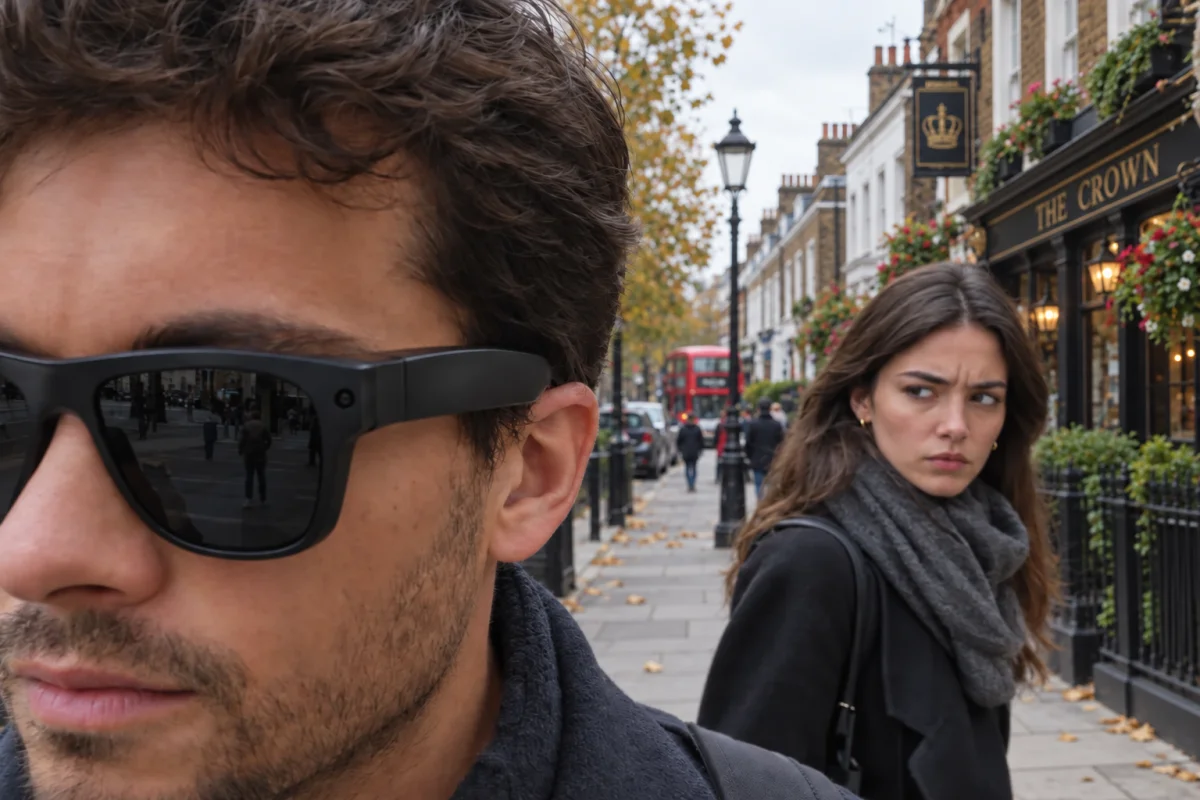
They look like ordinary sunglasses, a little chunkier at the hinges. Yet a growing number of women have discovered they were filmed in the street, on a bus or in a bar by someone wearing camera glasses, then found the clip posted on TikTok or Instagram for laughs and views. On the most common models, one small detail on the frame gives the game away. It is useful to know, but it has blind spots too.
Filmed in the street, then posted online
The pattern is the same wherever complaints have surfaced. A man starts a conversation, the glasses record, and the exchange ends up online, often edited and mocked in the comments. The person filmed usually finds out only when friends send her the link.
In the UK, filming someone in a public place is not in itself a crime, and there is no general right to your own image. The law steps in elsewhere: harassment, voyeurism, or sharing intimate images without consent, which are all criminal offences. Posting a recognisable person's video for an audience can also bring data protection law into play.
The white light, the only visible sign of recording
Meta's frequently asked questions, updated in July 2026, describe a white "capture LED" on the front of every pair, Ray-Ban Meta and Oakley Meta alike. It flashes briefly for a photo and stays on throughout a video, as soon as images are being saved to the gallery.
Since the second generation, the camera is disabled if the light is covered. An update also blocks it if the LED is damaged or destroyed. A flaw found at the end of August 2026 showed the limits: the check only ran at the start of recording, so covering the light once a video had begun let it carry on. Meta started rolling out a fix at the end of August that keeps checking the light throughout the recording.
A light that is off proves nothing
The LED signals that something is being saved to the gallery, not that the camera is in use. When the camera serves Meta AI features, such as recognising a landmark or a plant, the light stays off, and the image is processed without going through the gallery.
In the United States, tech journalist Joanna Stern found people paying up to $100 to have the light drilled out, with listings in 30 states. Nothing similar has been documented in the UK. And the light is a Meta feature only: other camera glasses follow their own design choices.
In the moment: ask, and keep a record
If someone is staring at you through thick-framed glasses, look at the front of the frame. A flashing or steady white light means a picture or video is being taken. Then:
- Ask them to stop and delete it, calmly and clearly.
- Note who saw it: names or contact details of witnesses help later.
- Move away and alert staff if you are in a shop, bar or on public transport.
Getting the video taken down
If the clip appears online, gather evidence before reporting it, because it may vanish along with the proof:
- Screenshot the post, its web address, the account name and the date.
- Report it with the tool under the post. Under the Online Safety Act, platforms must act on illegal content.
- Ask the account holder or the platform to erase it under UK data protection law. An organisation has one month to respond to an erasure request, and the Information Commissioner's Office takes complaints after that.
- Go to the police if the filming was sexual, intimate, or part of a pattern of harassment.
If the person filmed is under 18, Childline's Report Remove tool helps take down sexual images. For more on staying safe with connected devices, browse our mobile and gadget guides.
What wearers are expected to do
Owning camera glasses is legal. But anyone filming people for an online audience, rather than for purely personal use, takes on duties under data protection law: be clear that you are recording, and remove footage when asked. The light on the frame is a minimum, not a licence to film strangers.