
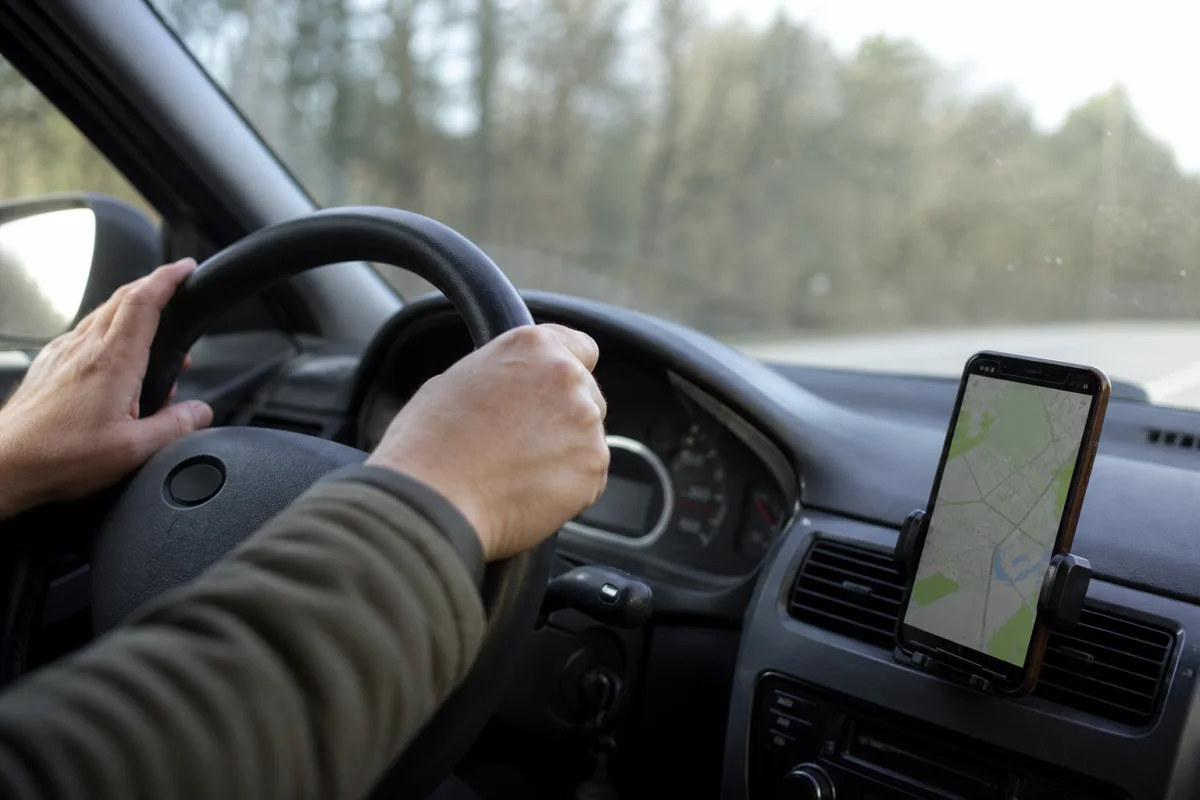
It has been illegal to hold a phone at the wheel for years, but since March 2022 the rules cover almost anything you can do with one, from checking a notification to scrolling through a playlist. With AI cameras now spreading across the country, getting caught has never been easier. Here is where the line falls, and what a moment of distraction will cost you.
Holding the phone is the offence, whatever you are doing with it
Since 25 March 2022 it has been illegal to hold and use a handheld phone for any reason while driving. The rules now reach far beyond calls and texts: taking a photo or video, scrolling through a playlist, checking notifications or playing a game all count.
Before that date, drivers caught filming or gaming could argue they were not "communicating" and escape a charge, but that loophole is now firmly closed. The simple act of holding the device is what breaks the law, whether or not the car is moving.
What stays legal: hands-free, sat-navs and two narrow exceptions
The law targets holding the phone, not the technology itself. As long as the phone is secured in a cradle and you never pick it up, you are within the law. Two narrow exceptions survive on top of that, and both are easy to get wrong.
- Hands-free calling through a cradle, Bluetooth or voice commands, without touching the phone.
- A sat-nav fixed to the windscreen or dashboard, set up before you set off.
- A contactless payment at a drive-through or toll booth, but only when the vehicle is not moving.
- Dialling 999 or 112 in a genuine emergency when it is unsafe to stop.
- Holding the phone for any reason, be it a call, a text, a photo, a playlist or a game.
- Picking it up at traffic lights or in a queue with the engine running.
- A cradle positioned so it blocks your view of the road ahead.
At traffic lights and in a jam, you are still driving
This is the trap most drivers fall into. Being stopped at traffic lights or queuing in slow traffic with the engine running still counts as driving, so reaching for your phone in those moments is an offence too.
Switching on your hazard lights makes no difference. To use a handheld phone legally you need to have parked safely off the road, with the engine off, not simply come to a halt in the traffic.
A £200 fine, six points and a harsher hit for new drivers
Getting caught means a fixed penalty notice, but a serious case can be sent to court, where the fine climbs steeply. The sting is worst for newer motorists, whose licence is revoked outright. Here is how the penalty scales.
Good to know: anyone who passed their test in the last two years is sent back to a provisional licence the moment they reach six points, and must retake both the theory and practical tests. A single handheld phone offence is enough to trigger it.
AI cameras are tightening the net
Enforcement is getting sharper. AI-equipped cameras that automatically spot a phone in a driver's hand are now used by around half of UK police forces, catching offenders day or night and in poor weather.
Every image flagged by the system is checked by a human reviewer before a penalty is issued, but the practical effect is clear: the days of assuming no one was watching are over.
How to use your phone without risking it
The safest habit is to set everything up before you pull away, then treat the phone as untouchable once the engine is running. A few minutes of preparation keep both your licence and your wallet intact.
- Enter your destination in the sat-nav before you set off, with the car stationary and the engine off.
- Fix the phone in a cradle that does not block your view, low on the windscreen or on a vent, never in your eyeline.
- Switch on Do Not Disturb While Driving, from Settings → Focus → Driving on iPhone or Driving Mode on Android.
- Route calls through hands-free using Bluetooth or a voice-activated earpiece.
- Download offline maps where signal is patchy, so you never need to touch the screen mid-journey.
If you are reviewing your setup, comparing mobile deals can help you find a plan with the data a hands-free routine needs.